Navigating Small Talk in Remote Team Check-Ins
Let's be real. You wouldn't stand in a colleague's cubicle staring at your own face while you asked about their weekend. But that's exactly what remote small talk feels like. You're performing a social ritual while being hyper-aware of your own thumbnail video feed. You're reading a room that's just a grid of still images. No shared coffee machine, no collective groan about the printer. It's a sterile stage, and it amps up the anxiety. The silence feels louder. The "how are yous" feel thinner.
Screw "Team Building." Aim for "Team Knowing."
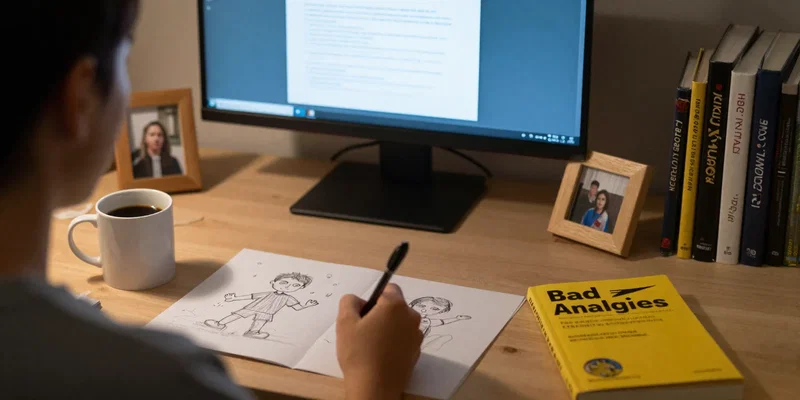
Forget the forced, cringey icebreakers. Nobody wants to share their spirit animal. The goal isn't to build some abstract concept of "team." It's to just... know each other as humans. The tiny, real details do that. The weird mug you drink from. The poster on your wall. The fact you foster rescue rabbits. Mention that you're waiting for a plumber. It’s these mundane, non-work specifics that build connections. They create mental hooks. Next time, someone can ask, "Hey, did the plumber show up?" That’s connection. That’s the good stuff.
Your Secret Weapon: The Pre-Loaded Question
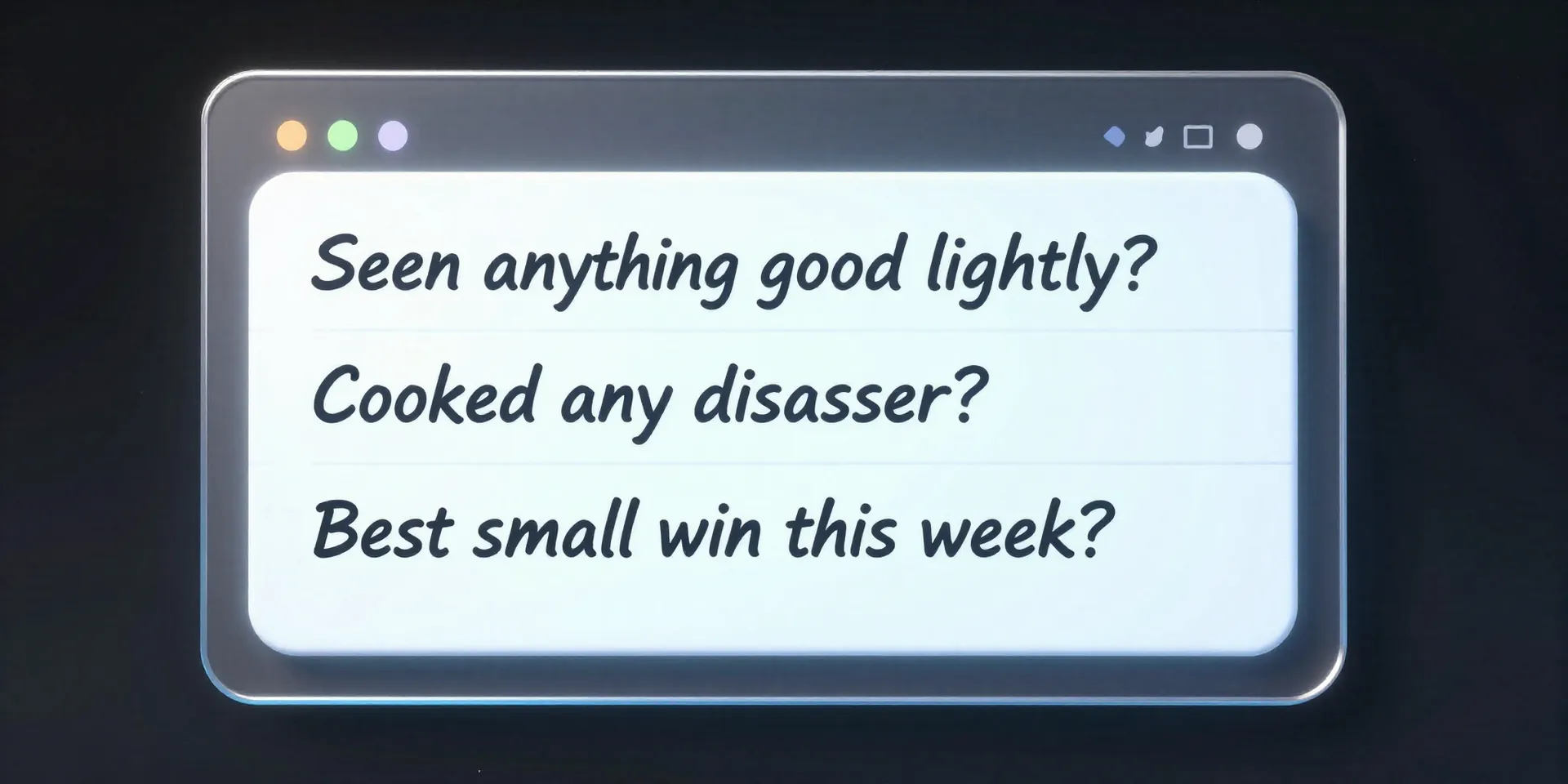
Walking into a virtual room cold is the worst. Your brain freezes. Here's the fix: have one question in your pocket before you even click "Join Meeting." It's not cheating; it's strategy. Make it low-stakes and open-ended. "What's the best thing you watched/read/listened to recently?" "Any kitchen experiments gone hilariously wrong?" "What's one small win you had this week?" Bam. You're not scrambling. You're offering a lifeline to the whole group. And honestly? You'll get way more interesting answers than "Fine, you?"
The 90-Second Rule: Keep it Short & Sweet
Small talk isn't a deep dive. It's a quick splash. Set a mental (or literal) timer for the first 90 seconds of the call. That's the zone. The goal is a brief, warm human connection before the agenda starts. It's a check-in, not a therapy session. If a conversation starts to get good—someone's really passionate about their sourdough starter—you can always say, "That's awesome, I want to hear more about that after we tackle the Q3 report." You've validated them. You've kept things moving. Everybody wins.
Silence Isn't a Failure. It's a Breather.
We're so trained to fill every second of dead air. But a two-second pause after "How's it going?" isn't a disaster. It might mean someone is actually thinking. It might mean they're on mute. It might just be a normal conversational beat. Don't instantly panic and jump in to rescue it. Give it space. Someone will pick it up. Your job isn't to host a talk show. Your job is to be a decent human in a meeting. Sometimes decent humans are quiet for a second.
Permission to Lurk (Seriously)
Not everyone has to be "on" every time. If you're drained, or anxious, or just have nothing to add to the chat about the new Marvel show, that's okay. You can participate by listening. A nod. A smile. A thumbs-up in the chat. You are still part of the social fabric. Forcing yourself to perform when you're not up for it makes it worse for everyone. Give yourself the grace to be a spectator sometimes. The team will survive. Your authenticity is more valuable than a forced contribution.